Where did our money go? The questions nobody wants to ask about Ukraine
26 Aug 2026 · 18 min
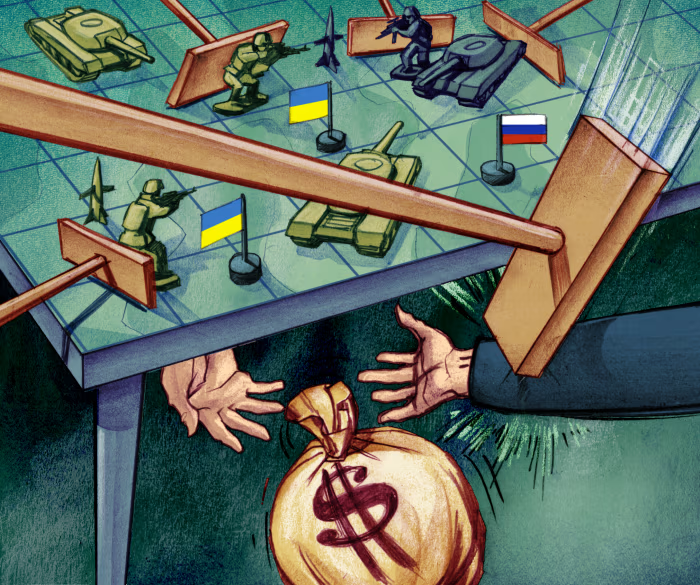
There's a kind of question that, in recent years, has become socially expensive to ask. You start the question and, before you finish the sentence, someone has already decided which side you're on.
But the question remains legitimate, and it is this: hundreds of billions of euros left the pockets of European taxpayers and went to a country that, year after year, ranks near the bottom of corruption indexes. Who is checking where that money ended up?
It isn't a Russian question. It's a taxpayer question. And before anyone says "Russia is corrupt too, so there's no problem" — we are not sending millions in aid to Russia, but to this country that leads in corruption and appears in the Epstein files as a place that would be great for corruption schemes. (https://www.justice.gov/epstein/files/DataSet%209/EFTA00507813.pdf)
First, the numbers
Since 2022, Western countries have committed more than €340 billion in military, financial and humanitarian support to Ukraine. By April 2026, Europe had already overtaken the United States in allocated aid — €138 billion against €115 billion. And the EU launched the Ukraine Support Loan, a €90 billion loan intended to cover Ukrainian budgetary and defence needs in 2026 and 2027. (https://executivedigest.sapo.pt/portugal-longe-do-topo-veja-quanto-pagou-cada-contribuinte-no-apoio-a-ucrania/)
And Portugal?
€250 million in bilateral financial support agreed in May 2022 by António Costa in Kyiv.
€100 million for the Czech initiative to jointly purchase ammunition, approved by the Council of Ministers in March 2024.
A 10-year bilateral security agreement signed in Lisbon in May 2024, with at least €126 million in military support that year alone.
Montenegro announced military and financial support exceeding €220 million in 2024, promising to repeat the amount the following year.
At least another €300 million requested from Portugal in 2025 under a €20 billion European package.
On top of this, our share in European mechanisms: around €90 million in 2022, and around €270 million linked to Portuguese participation in the €18 billion macro-financial assistance mechanism in 2023.
Notice one thing: I just spent quite a while putting this together, and I can't give you a clean total. Bilateral, European, military, financial, in-kind, loan, donation, "committed", "allocated" — the categories overlap and nobody presents the bill in a consolidated, simple way to the citizen who paid it.
What exists is a per-capita estimate: between 2022 and 2025, each Portuguese taxpayer paid on average around €181 in support to Ukraine.
It isn't a scandalous amount. But it's your money, and you never saw the invoice.
Then, what was discovered about part of it
And here the conversation stops being abstract.
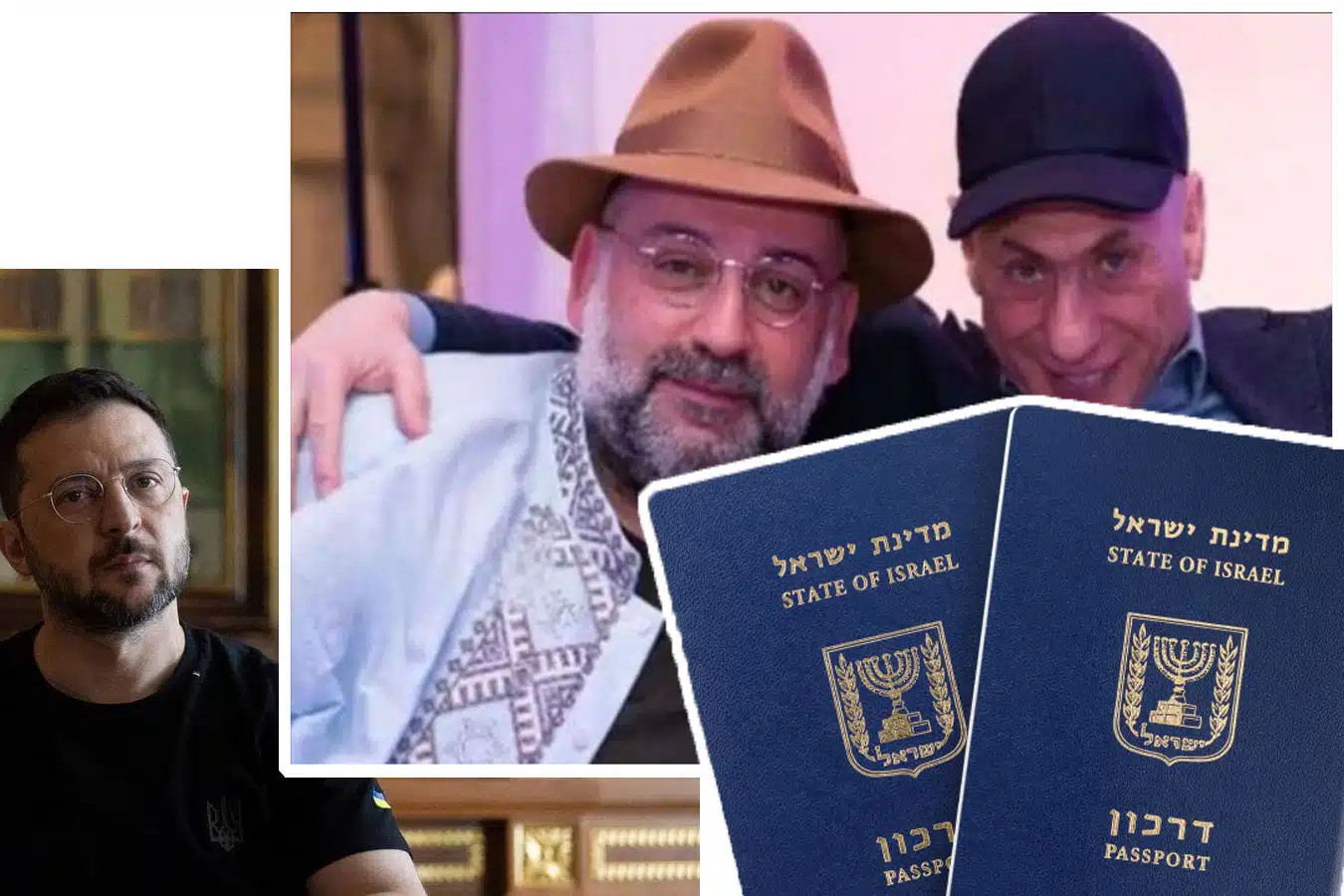
On 10 November 2025, Ukraine's National Anti-Corruption Bureau (NABU) and the Specialised Anti-Corruption Prosecutor's Office (SAP) made Operation Midas public — a 15-month investigation with more than 70 searches, hitting Zelensky's friend and former business partner Timur Mindich, Justice Minister Herman Halushchenko and the headquarters of Energoatom, the state nuclear operator. They all fled before being arrested. Guess where to? Israel, which rejected extradition. (https://www.osw.waw.pl/en/publikacje/analyses/2025-11-13/operation-midas-largest-corruption-scandal-within-zelenskys-inner; https://english.nv.ua/nation/ukraine-awaits-israel-s-response-on-extradition-of-mindich-and-zuckerman-50631646.html)
The scheme: a criminal group embedded inside Energoatom extracted 10 to 15% of contract value from suppliers, under threat of blocking payments or removing them from the approved suppliers list. At least $100 million was diverted this way. (https://www.osw.waw.pl/en/publikacje/analyses/2025-11-13/operation-midas-largest-corruption-scandal-within-zelenskys-inner)
And there was a perverse detail: the scheme exploited a government regulation that forbids suppliers from suing strategic companies like Energoatom in court during martial law. In other words — the very wartime legislation was used as an instrument of blackmail. (https://www.yahoo.com/news/articles/explainer-going-ukraines-biggest-corruption-194733607.html)
Part of the money was meant for energy infrastructure: funds for repairing the grid during the war, after Russian attacks, diverted through bribes in contracts.
Who appears in this:
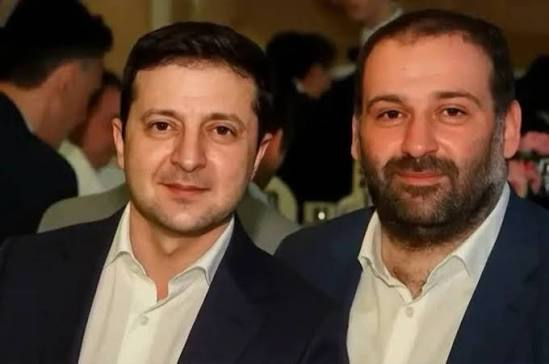
Timur Mindich, identified as the ringleader — co-owner of Kvartal 95, the production company of the President himself. He was tipped off and left the country for Israel before being charged. (https://www.timesofisrael.com/zelensky-associate-at-crux-of-ukrainian-corruption-case-said-to-have-fled-to-israel/)
Herman Halushchenko (Justice) and Svitlana Hrynchuk (Energy), who resigned on 12 November 2025; Halushchenko was later detained by NABU while crossing the border towards Israel.
Oleksiy Chernyshov, former deputy prime minister, and Rustem Umerov, former Defence Minister and later secretary of the National Security Council, who denies the accusations.
Andriy Yermak, Zelensky's chief of staff, whose house was searched and who eventually resigned. (https://www.wsws.org/en/articles/2026/05/09/okfw-m09.html)
And this isn't even the first case. Before this there was the Defence food procurement scandal, deputy ministers dismissed, and the moment when all the heads of the country's regional recruitment centres were fired at once for selling exemptions to those who didn't want to go to the front.
And the question about the former actor
The interesting question is another one: how does a comedian with zero political experience get there?
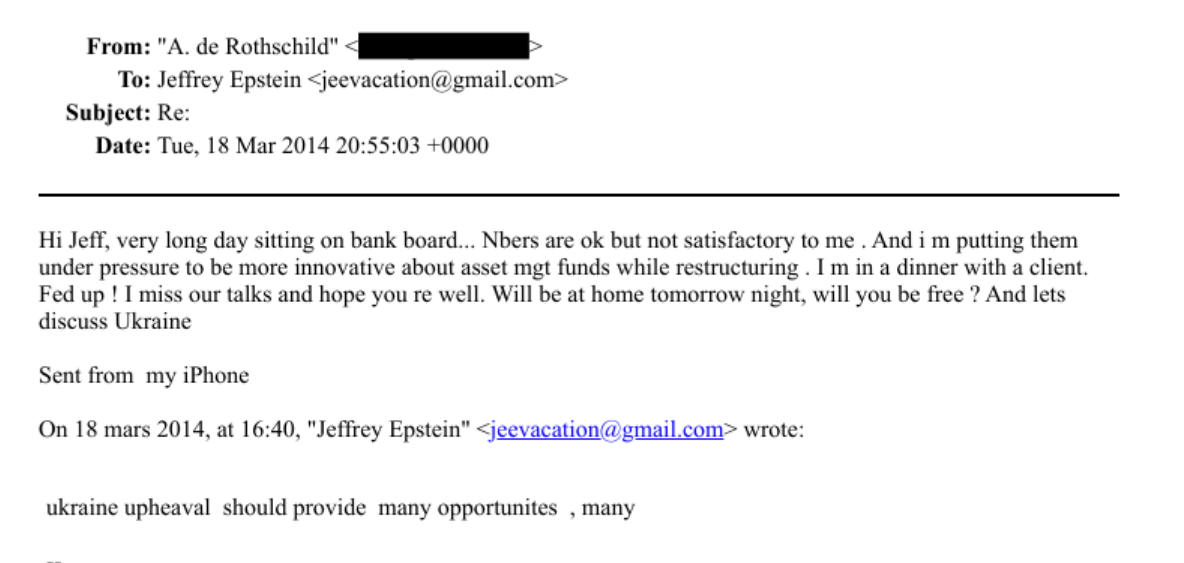
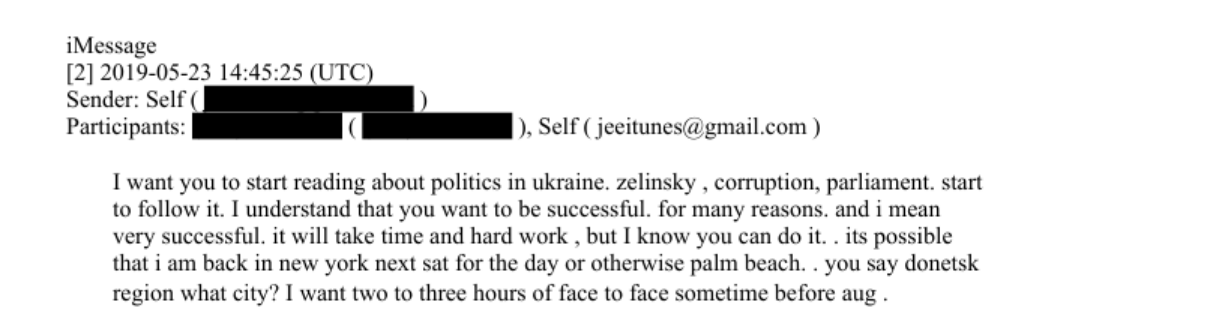
And the answer has a name. Zelensky became famous playing, in the series Servant of the People, an honest teacher who becomes President and fights corruption. Ironic, isn't it? The series was broadcast on channel 1+1, owned by Ihor Kolomoisky, the oligarch who financed Zelensky's rise in 2019. Another curiosity is that Zelensky appears in emails between Epstein and Rothschild, saying he would be the next president and would help create many corruption businesses in Ukraine.
And now Mindich — the production company partner — appears as the alleged organiser of the country's biggest corruption scheme. No conspiracy theory is needed. The whole story is in plain sight, and it is terrible.
You may think supporting Ukraine is the right thing to do. Many people do, especially because the media hides all of this to maintain the Zionist narrative of the American government, which uses the corrupt Ukrainian government as a point of destabilization between Europe and Russia, in order to fuel its war machine, promote the distancing between EU countries and Russia, and turn this conflict into an endless war that finances many corrupt politicians within the EU and Ukraine. Who suffers? Russians and Ukrainians.
But two things are not the same: supporting a country and signing blank cheques without audit, without accounts, without questions and without understanding why and who caused this conflict.
The question remains, and it is the simplest of all: where is the invoice for the money we paid?
Comments
Comments go up instantly. Bring reasons; slop gets deleted.
No comments yet. Be the first to start an argument.